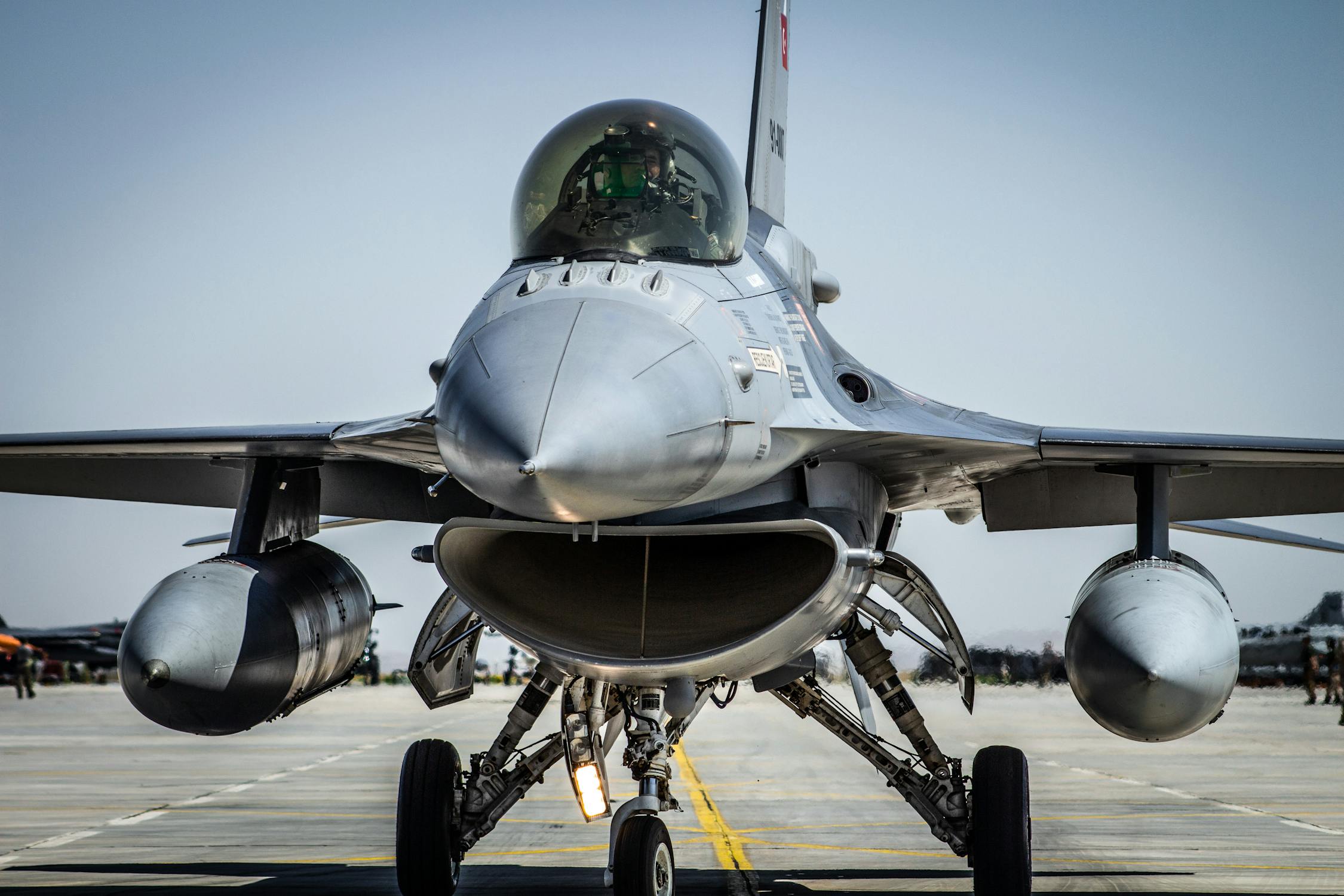
The Defence Spending Pivot: Scale, Speed, and Structural Implication
The Russia-Ukraine conflict, now entering its fourth year, has produced a fundamental reassessment of European security architecture. The reduction in US security commitment signalled by the Trump administration's transactional approach to NATO has converted the case for European defence self-sufficiency from an academic argument into an operational urgency.
The fiscal numbers are large. Germany has restructured its constitutional debt brake to carve out defence spending above 1% of GDP, effectively creating unlimited fiscal space for rearmament. The aggregate European defence spending increase implied by NATO's revised targets moving toward 3% of GDP for many member states, compared to the historic 2% target that most failed to meet represents an annual demand injection across the European defence industrial base of several hundred billion euros over the coming decade.
This is not simply a transfer payment. It is capital expenditure with significant multiplier effects. Defence procurement involves high-value manufacturing, advanced technology development, systems integration, logistics infrastructure, and sustained maintenance contracts. The industrial supply chains it creates in avionics, armoured vehicles, naval assets, missile systems, cybersecurity, and dual-use technologies are deeply embedded in domestic economies in ways that generate employment, technology spillovers, and export capacity.
The German supplementary budget approved in early 2026 equivalent to approximately 2.8% of GDP is the most visible manifestation of this fiscal shift. The package combines measures to address high prices, crisis management, growth investments, and defence capability enhancement. A significant portion of the actual spending is deferred to 2027 and beyond through procurement cycle timings, which is why the GDP growth impact in 2026 itself is muted relative to the scale of the commitment. But the pipeline is real, and the industrial implications are already visible in order books for European defence prime contractors.
Germany: The Industrial Reckoning
Germany's economic difficulties in 2026 are structural, not merely cyclical, and the distinction matters enormously for the investment thesis. A cyclical downturn reverses when the cycle turns. A structural challenge the erosion of competitive advantages that were built over decades requires a fundamentally different type of response.
The German economic model was constructed on four pillars: competitive energy costs (historically underpinned by Russian gas); a strong position in combustion engine automotive manufacturing; export orientation toward China for capital goods and industrial equipment; and a highly skilled engineering workforce supported by the Mittelstand. In 2026, all four pillars are under significant stress simultaneously.
Energy costs remain elevated relative to pre-2022 levels despite the normalisation from the acute crisis period. The Russian gas supply that underpinned the economics of German chemical manufacturing, glass, ceramics, and metals processing has been permanently restructured. LNG is more expensive, and while energy prices have come down from their peaks, the structural cost disadvantage relative to the United States where domestic gas prices are a fraction of European levels remains.
The automotive transition is a profound competitive challenge. German automotive OEMs Volkswagen, BMW, Mercedes-Benz are competing against Chinese electric vehicle manufacturers that have achieved genuine cost competitiveness and, in some technological dimensions, leadership. The transition from combustion engine to EV disrupts the traditional German supply chain, in which hundreds of Mittelstand suppliers produce highly engineered combustion-specific components that have no equivalent in an electric drivetrain.
Export exposure to China has created a strategic vulnerability rather than the durable advantage it appeared to be during the 2010s. Chinese domestic production is substituting for German capital goods imports in multiple categories, and the Chinese industrial policy acceleration has compressed the technology premium that German manufacturers could historically charge.
The ECB Rate Path and Its Implications
The European Central Bank entered 2026 in a position of carefully managed normalisation. With inflation having retreated toward target across most of the eurozone, and with growth remaining below potential, the ECB's policy bias is toward further accommodation. The policy rate is expected to settle toward 2% over the course of 2026 and into 2027 approaching what the ECB internally estimates as the neutral rate.
This rate path has several significant implications for European capital markets. Lower short rates reduce the financing cost for the fiscal expansion that is underway the spread between government bond yields and ECB policy rates is the key variable for sovereign debt sustainability in highly indebted member states (Italy, France, Spain, Portugal). As long as the ECB's accommodation keeps spreads contained, the fiscal expansion is fundable.
For European corporate credit, lower rates are directionally supportive, but the quality dispersion between strong-balance-sheet investment grade issuers and more leveraged high yield borrowers is widening. Sectors exposed to US tariffs (automotive, luxury goods, industrial machinery) face earnings pressure that offsets the financing cost benefit. Sectors aligned with the European fiscal expansion (defence contractors, infrastructure, energy transition, data centre development) have a more benign fundamental backdrop.
France: Political Risk in a Structurally Important Economy
France is the elephant in the eurozone room that the aggregate data tends to obscure. As Europe's second-largest economy and one of the eurozone's two fiscal anchors (alongside Germany), French political and economic developments have systemic implications.
The pre-2027 presidential election period introduces meaningful political uncertainty. The Macron administration is effectively in its final phase, and the political landscape creates uncertainty about the direction of French fiscal and European policy post-2027. Markets have periodically reflected this uncertainty in French OAT spreads, which have widened relative to German Bunds.
On the positive side, France retains significant competitive advantages: nuclear energy (providing among the lowest electricity costs in Western Europe), a high-quality infrastructure base, a world-class luxury goods and aerospace sector, and a more diversified financial services sector than Germany.
What Could Drive a Genuine European Recovery
The case for European outperformance relative to current consensus expectations rests on several conditions that are not in the base case but are not implausible:
Fiscal multipliers outperform. If the defence and infrastructure spending programmes transmit to the real economy more quickly and with larger multipliers than the cautious ECB and Commission forecasts assume, the growth impulse could be front-loaded into 2026 rather than back-loaded into 2027-2028. Historical analysis of military spending multipliers suggests they can be substantial, particularly when the procurement involves domestic production rather than imports.
Household consumption reverts. European households have maintained elevated savings rates throughout the post-COVID and post-energy shock period. If confidence driven by lower energy bills, falling inflation, and improving labour market conditions leads to a reversion toward normal consumption behaviour, the demand impulse could be significant.
Technology wave reaches Europe. AI adoption in European enterprises has lagged the United States and, to some extent, China. If the technology wave that has driven US productivity gains begins to diffuse more broadly into European business processes, the productivity improvement could translate into earnings growth and investment acceleration.
Ukraine peace dividend. A ceasefire or peace agreement in Ukraine even an imperfect one would have a non-trivial positive impact on European business confidence, energy security perceptions, and potentially on the reconstruction investment programme that European businesses and capital markets would be well-positioned to participate in.
Conclusion: Patience and Selectivity
For allocators with a two-to-three year horizon, the combination of below-consensus growth expectations (already priced in equity valuations), a genuine fiscal expansion underway, and ECB accommodation creates a setup that is worth examining carefully.
The sectors best positioned to benefit from the European fiscal pivot defence and aerospace, infrastructure, energy transition, and domestic financial services have a more direct connection to the structural spending programmes than the broader index. The risks are real: political fragmentation in France and Germany, slower-than-expected transmission of fiscal spending, exposure to US tariff escalation, and the broader geopolitical uncertainty that has characterised the European neighbourhood for the past four years. But for institutions capable of holding through the transmission lag, the European investment case in 2026 is more compelling than the consensus narrative implies.
This article is produced by Brenton Financial Research for informational and educational purposes only. It does not constitute financial, investment, legal, or tax advice. The views expressed reflect the research team's analysis of publicly available information and should not be relied upon as the basis for any investment decision. Brenton Financial Pty Ltd (ABN 21 696 298 227). Past performance is not indicative of future results. All investments involve risk, including the possible loss of principal.