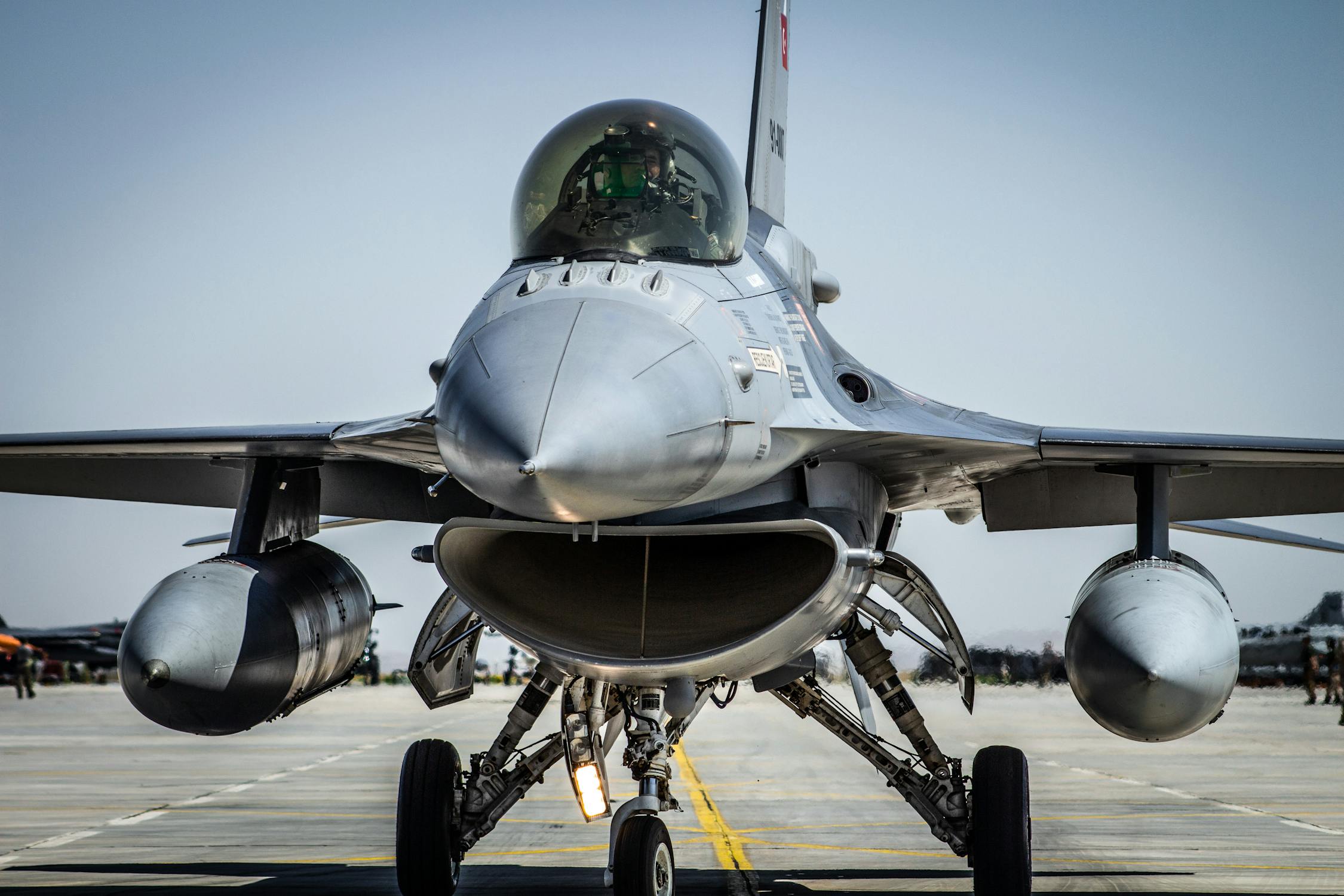
The Scale of the Spending Commitment
For most of the post-Cold War era, defence was the sector that serious institutional allocators visited periodically, collected some dividend income, and largely ignored in the context of broader thematic investment. It was predictable government procurement contracts provided earnings visibility but not exciting. Growth was constrained by political will on defence budgets, by arms control treaties, and by the fundamental competitive dynamic of democratic politics, in which voters rarely reward politicians for defence spending at the expense of social programmes.
That environment no longer exists. The Russia-Ukraine conflict has provided the most visceral evidence in a generation that military capability is not a relic of history but a current operational requirement. The Trump administration's explicit conditionality on US security commitments has catalysed a European defence autonomy project that is now backed by hard fiscal commitments. The China-Taiwan dynamic, the expansion of Iranian proxy warfare, and the emergence of "drone warfare" as a technology domain that requires continuous investment all of these have combined to create a geopolitical environment in which defence spending is a priority rather than a discretionary item for a growing number of governments.
The numbers are large. NATO's revised defence spending target moving from the previous benchmark of 2% of GDP to what multiple alliance members are now discussing as 3%+ of GDP implies a sustained increase in annual defence expenditure across the alliance that is measured in hundreds of billions of euros per year.
European NATO members collectively spent approximately $380 billion on defence in 2024. A move to 3% of GDP across the alliance would imply spending of approximately $600-650 billion annually a 60-70% increase from the recent baseline. This is not a projection that anyone expects to be achieved uniformly or immediately. Procurement cycles, industrial capacity constraints, and political processes create inevitable delays. But the direction and the commitment are real, and the compounding over time is significant.
Germany's constitutional amendment removing the debt brake for defence spending above 1% of GDP is the most symbolically significant single policy change. Germany is Europe's largest economy and, historically, its most fiscally cautious major power. The fact that Germany has chosen to create unlimited fiscal space for defence rearmament overturning a constitutional principle that shaped German fiscal policy for decades signals how seriously the strategic environment has been reassessed in Berlin.
The United Kingdom, despite its post-Brexit budgetary constraints, has committed to raising defence spending to 2.5% of GDP, with a stated ambition to reach 3% contingent on fiscal conditions. France is accelerating its own procurement programmes. The Nordic countries Finland and Sweden as new NATO members, Denmark and Norway as longstanding ones are among the most motivated members of the alliance, given their proximity to Russian territory.
Beyond NATO, the defence spending acceleration is a global phenomenon. Japan has committed to doubling its defence budget to 2% of GDP by the end of the decade, the largest military expansion in postwar Japanese history. South Korea, Australia, and Taiwan are all increasing defence budgets in response to the evolving regional security environment. India is accelerating its own procurement and is explicitly promoting domestic defence industrial development through its "Make in India" programme.
The Defence Technology Revolution
The Russia-Ukraine conflict has served as a laboratory for the future of warfare in ways that are reshaping defence procurement priorities. Several themes have emerged with clarity.
Drone Warfare
The conflict has demonstrated that low-cost, commercially produced drone technology can achieve strategic effects that previously required expensive, complex military platforms. Both sides have deployed drones for reconnaissance, artillery correction, direct attack, and electronic warfare at a scale and intensity that has no historical precedent. The implication for defence procurement is dual: a significant demand for military drone capabilities (both offensive and countermeasure) and a vulnerability in traditional high-value platforms to drone attack that requires urgent attention.
Precision Long-Range Strike
The conflict has demonstrated the military value and strategic significance of precision long-range missile capability. Ukrainian use of Western-supplied HIMARS systems, Storm Shadow missiles, and ATACMS changed the tactical situation materially. The procurement implication is an acceleration of long-range precision strike capability across NATO armies that had historically deprioritised this category.
Electronic Warfare and Cyber
The contested electromagnetic environment of the Ukraine conflict has validated the importance of electronic warfare capability jamming, electronic deception, and signals intelligence. Cyber operations have been used by both sides for reconnaissance and infrastructure disruption. Defence procurement is increasingly incorporating these capabilities as primary line items rather than supplementary investments.
Air Defence
Russian missile and drone attacks on Ukrainian cities and infrastructure have created a sustained operational requirement for air defence Patriot systems, SHORAD (short-range air defence), and eventually directed energy systems. The demand for air defence systems across Europe is acute and exceeds current industrial production capacity.
This last point industrial production capacity is perhaps the most important structural constraint on the defence spending cycle. Defence industrial capacity is not a light switch. Factories, skilled workers, specialised supply chains, and the validated production processes required for safety-critical military equipment take years to expand. The current situation across most NATO defence prime contractors is that order books are full, lead times are extended, and capacity constraints are binding. This is a profitability-positive environment for incumbents, and it creates barriers to entry that protect the competitive positions of established players.
The Defence Investment Universe: Key Sub-Sectors
For investors seeking to understand the capital market implications of the defence spending cycle, a sector decomposition is useful.
Prime Contractors
The large defence prime contractors Lockheed Martin, Raytheon (RTX), Northrop Grumman, and General Dynamics in the US; BAE Systems, Airbus Defence, Leonardo, Rheinmetall, and Thales in Europe are the most direct beneficiaries of increased procurement. These companies hold the system-level contracts, provide the integration capability, and have the sovereign government relationships that translate defence budgets into revenue.
Rheinmetall deserves specific mention as perhaps the most compelling pure-play on the European rearmament theme. The German company is the continent's leading manufacturer of large-calibre ammunition (which is in acutely short supply), armoured vehicles, and air defence systems. Its order book has grown dramatically, and its expansion plans new manufacturing facilities across Europe reflect a generational uplift in demand.
Ammunition and Munitions
The rate of ammunition consumption in the Ukraine conflict has exposed a critical shortage in NATO stockpiles. Ammunition production capacity which was scaled back dramatically after the Cold War is being rebuilt, but slowly. Companies with ammunition production capability are operating at full capacity with multi-year order books.
Space and Satellite Systems
The critical role of commercial satellite communications in Ukrainian military operations has validated the strategic importance of space-based capabilities and accelerated military investment in both offensive and defensive space domains.
Cybersecurity
The convergence of military and civilian cybersecurity spending is creating a large and growing addressable market. Governments are increasingly recognising that critical infrastructure protection requires the same analytical and technical investment as traditional defence.
Defence Technology Enablers
This is the intersection of defence and technology that is attracting the most attention from venture capital and growth equity investors. AI-enabled autonomous systems, electronic warfare software, advanced materials, and next-generation propulsion technologies are being funded at a pace that reflects both the strategic urgency and the commercial opportunity.
Critical Minerals: The Hidden Supply Chain
Behind every advanced weapon system, there is a supply chain of specialised materials and components that is less visible than the headline platform but no less strategically important. Critical minerals rare earth elements, lithium, cobalt, tungsten, beryllium, and others are inputs to the guidance systems, communications equipment, energy storage, and structural materials that define modern military capability.
The geography of critical mineral production is a profound strategic vulnerability for Western militaries. China dominates the production and processing of most of the rare earth elements. The Democratic Republic of the Congo produces a significant share of the world's cobalt. Russia is a major supplier of palladium, titanium, and nickel. The strategic dependence of defence supply chains on inputs from potential adversaries is precisely the kind of vulnerability that comprehensive strategic competition has moved to the centre of defence planning.
Dual-Use Technology: The Blurring Boundary
One of the most significant features of the current defence technology environment is the acceleration of dual-use technology development technologies that have both commercial and military applications and are being developed along both pathways simultaneously.
Autonomous vehicles, AI, satellite imagery, advanced sensors, quantum computing, biotechnology, and advanced manufacturing are all dual-use technologies in which commercial sector investment is generating capabilities that defence ministries are rapidly seeking to adopt. The convergence has created a category of companies sometimes described as "defence tech" that sit between the traditional defence prime contractors and purely commercial technology firms.
This dual-use dynamic has investment implications. Companies at the intersection of commercial technology and defence application drone software, AI-enabled surveillance, electronic warfare systems, and secure communications are capturing both commercial growth rates and defence spending tailwinds simultaneously, a combination that commands premium valuations.
The institutional case for the defence sector as a structural investment theme rests on a convergence of factors that is historically unusual: sovereign government commitments of unprecedented scale, industrial production constraints that create extended earnings visibility, a technology revolution expanding the definition of "defence" into adjacent commercial markets, and a geopolitical environment that shows no signs of returning to the benign baseline that allowed defence budgets to be cut for three decades.
Conclusion: A Decade-Long Theme
This does not mean that the defence sector is without risk. Procurement programmes are cancelled; technology development is uncertain; geopolitical environments can shift; and valuation multiples that reflect strong long-term visibility can compress if near-term earnings disappoint. Investors need to apply the same discipline to defence as to any other sector: bottom-up analysis of specific companies, attention to contract win rates and programme execution, and careful consideration of valuation relative to growth trajectory.
But the structural tailwinds are real, and they are multi-year. For institutions with appropriate horizons, the defence spending cycle of 2026-2035 is likely to prove one of the more durable and analytically tractable investment themes of the decade.
This article is for informational purposes only and does not constitute investment advice, a recommendation, or an offer to buy or sell any security. The views expressed are those of Brenton Research and are subject to change without notice. Brenton Financial Pty Ltd (ABN 21 696 298 227). Past performance is not indicative of future results. All investments involve risk, including the possible loss of principal.