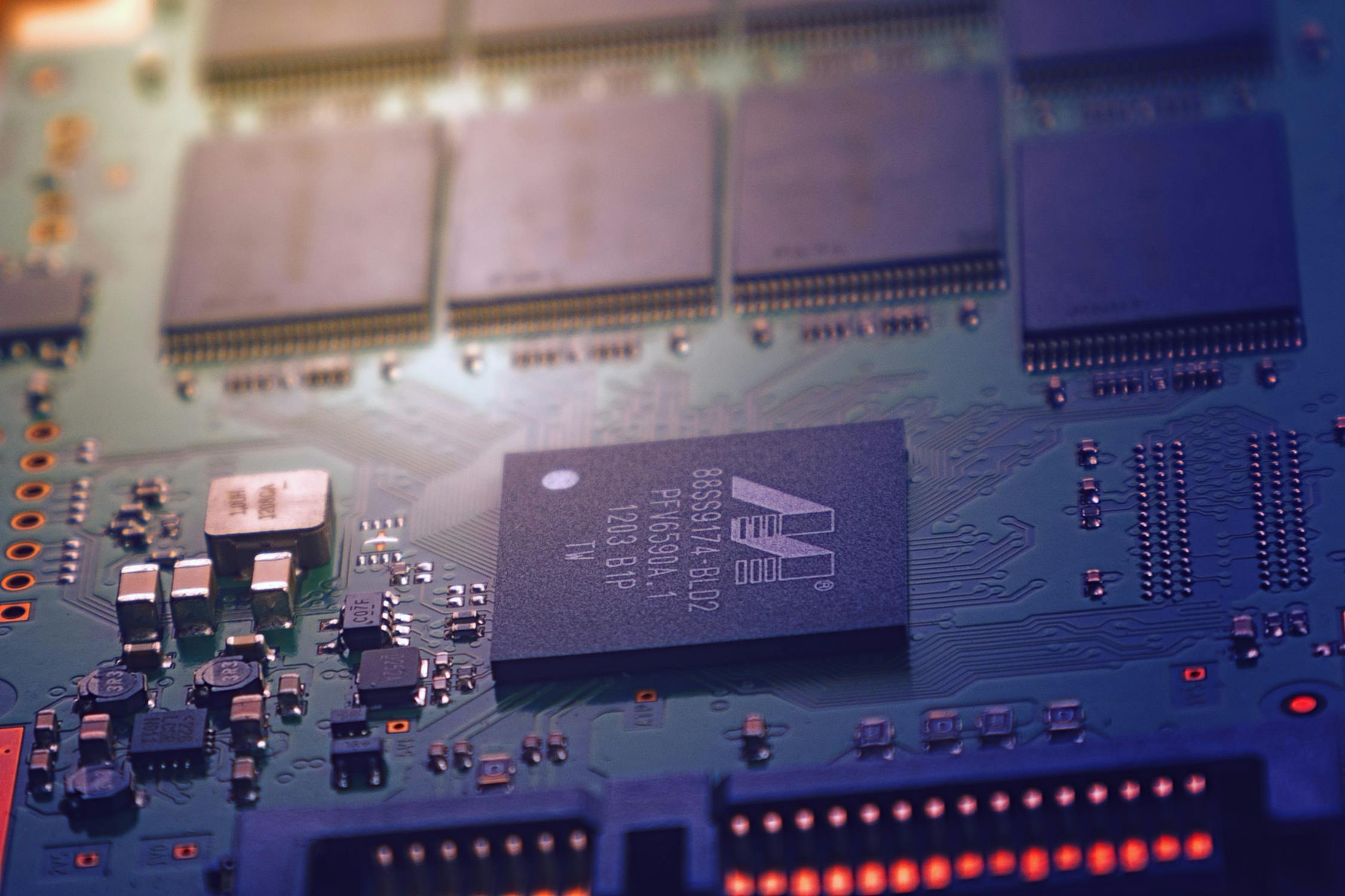
There is an argument not frivolous, and held by a number of serious strategic analysts that semiconductors are the oil of the 21st century. Not in the sense that they power vehicles (though increasingly they do, in electric drivetrains and autonomous systems), but in the sense that they are the resource whose control determines industrial and military power, whose supply chains are geographically concentrated in ways that create strategic dependencies, and whose pricing and availability can move markets and shape geopolitical calculations as decisively as oil price spikes shaped the 1970s.
This analogy has limitations, as all analogies do. Oil is consumed; semiconductors are embodied in durable goods and depreciating infrastructure. Oil has relatively homogeneous strategic properties; semiconductors range from commodity memory chips to the most complex engineered objects in human history. But the strategic importance of the semiconductor industry, and the extraordinary concentration of its most advanced production in a small number of companies in a geopolitically contested geography, is a genuine and consequential feature of the global economy.
The Demand Supercycle: AI's Insatiable Need for Compute
The semiconductor industry entered what has been characterised as a demand supercycle beginning in 2023, driven primarily by the compute requirements of AI training and inference.
Training a state-of-the-art large language model requires compute equivalent to tens of thousands of the most advanced GPUs running continuously for weeks or months. Inference running the trained model to answer queries is less compute-intensive per interaction but happens at a scale (billions of queries) that aggregates to enormous total compute demand. The hyperscalers building AI infrastructure are ordering GPUs in quantities and configurations that have strained the manufacturing capacity of both NVIDIA (the dominant AI GPU provider) and the downstream supply chain of packaging, memory, and cooling components.
SK Hynix the Korean memory manufacturer that is a critical supplier of the High Bandwidth Memory (HBM) that AI GPUs require has publicly stated that its order books for the coming year are already full. This is not a speculative demand projection; it is a firm commercial commitment from the largest technology companies in the world.
Beyond AI, the semiconductor demand environment is supported by secular growth drivers: the electrification of vehicles (an EV contains roughly 3-4 times the semiconductor content of a comparable internal combustion vehicle), the proliferation of connected devices in industrial and consumer applications, and the growing semiconductor content in defence systems.
The Supply Chain Architecture: Extraordinary Concentration
The production of advanced semiconductors is concentrated in a small number of facilities operated by a handful of companies a geographic and corporate concentration that has no precedent in any other strategically important industry.
TSMC (Taiwan Semiconductor Manufacturing Company) is the most critical single entity. As the world's dominant contract semiconductor manufacturer accounting for approximately 90% of production of the most advanced chips (7 nanometre and below) TSMC's operational continuity is a precondition for the functioning of the global AI economy. TSMC's facilities are located primarily in Taiwan, which is the subject of explicit territorial claims by the People's Republic of China and which exists in a perpetual state of strategic tension.
The supply chain that enables TSMC's production is itself highly concentrated. The extreme ultraviolet (EUV) lithography machines required to manufacture sub-7nm chips are produced exclusively by ASML, a Dutch company. The photomasks, process chemicals, and metrology equipment required for advanced semiconductor production involve a small number of companies including Applied Materials, Lam Research, Tokyo Electron, and KLA whose equipment cannot be quickly substituted.
The high bandwidth memory (HBM) required for AI GPUs is produced primarily by SK Hynix, with Samsung and Micron as secondary suppliers. The packaging technologies that integrate multiple dies into a single module (CoWoS, SoIC, and similar 3D packaging approaches) are concentrated at TSMC and a small number of Asian advanced packaging specialists.
Export Controls: The Technology Cold War
The US Commerce Department's semiconductor export control framework which restricts the sale of advanced chips, chip manufacturing equipment, and the software required to design advanced chips to Chinese entities has become one of the most consequential instruments of US economic statecraft.
The controls, which have been progressively expanded since their initial implementation in October 2022, now restrict: the most advanced AI chips (above certain performance thresholds); the EUV lithography machines required for leading-edge manufacturing (ASML can no longer export EUV to China); and advanced process technology for sub-14nm manufacturing.
The stated objective of the controls is to prevent China from achieving military-grade AI capability at a pace that would shift the balance of power in AI-enabled military systems. The secondary objective is to maintain US leadership in the semiconductor technology frontier for long enough that the US domestic industry can establish the manufacturing base being built under the CHIPS Act.
The Chinese response has been multi-layered. Huawei's Kirin 9000 chip manufactured by SMIC using DUV lithography (which is not restricted) achieved approximately 7nm-equivalent performance in 2023, demonstrating that Chinese manufacturers can approach leading-edge capability without access to the most restricted equipment. The degree to which Chinese manufacturers can close the remaining gap using non-restricted technology is a subject of genuine analytical disagreement.
The Critical Minerals Dimension
Behind every advanced semiconductor, there is a supply chain of specialised materials that rarely appears in investor presentations but is essential to production. Critical minerals particularly those with geographically concentrated production create strategic dependencies that are relevant to both the semiconductor industry and the broader national security calculus.
Gallium and germanium are essential inputs to compound semiconductors used in RF chips, solar cells, and certain military applications. China produces approximately 80% of global gallium and 60% of global germanium. Beijing has imposed export restrictions on both materials, an explicit reminder of its leverage over semiconductor supply chains.
Rare earth elements neodymium, dysprosium, and others are used in the magnets that drive the motors in semiconductor manufacturing equipment, in certain semiconductor manufacturing processes, and in the precision positioning systems of lithography machines. China's dominance of rare earth production and processing is a structural vulnerability that CHIPS Act recipients and equipment manufacturers are urgently seeking to address through supply chain diversification.
The Investment Landscape: Following the Compute Stack
For institutional investors, the semiconductor investment landscape in 2026 is characterised by extraordinary demand visibility, significant geopolitical uncertainty, and a valuation premium that reflects the market's recognition of both.
- Follow the compute stack: AI demand pulls through the entire semiconductor supply chain GPUs at the top, memory (especially HBM) one level down, packaging technology below that, silicon substrates further down, and process equipment at the base. Each layer of the stack has different competitive dynamics, different margin profiles, and different sensitivity to the AI demand cycle.
- Understand the geographic risk: TSMC's Taiwan concentration is the most discussed geographic risk, but the concentration of advanced packaging in Taiwan and South Korea, HBM memory in South Korea, and manufacturing equipment in the US, Netherlands, and Japan creates a risk landscape that is more complex than the Taiwan-focused narrative suggests.
- Assess the China revenue exposure: The export control framework means that companies with significant China revenue face an ongoing regulatory risk that can materialise suddenly. Detailed product-level analysis is required to understand the China exposure at an investable company level.
- Evaluate the AI demand duration: The AI compute cycle is real, but the pace of semiconductor demand growth at the current rate cannot be extrapolated indefinitely. Capital expenditure cuts by hyperscalers would directly affect near-term semiconductor demand.
The semiconductor industry is both the most important industrial sector of the 21st century and one of the most difficult to analyse rigorously. Its strategic importance derives from the concentration of capability and the centrality of compute to every dimension of the modern economy.
Conclusion: Strategic, Cyclical, and Irreducibly Complex
For institutions with the analytical capacity to hold this complexity, the semiconductor sector offers genuine long-term investment opportunity underpinned by the most compelling secular demand driver in the global economy. For institutions that cannot maintain this analytical complexity, the sector's volatility and geopolitical sensitivity may produce outcomes that do not match their risk tolerance.
This article is for informational purposes only and does not constitute investment advice, a recommendation, or an offer to buy or sell any security. The views expressed are those of Brenton Research and are subject to change without notice. Brenton Financial Pty Ltd (ABN 21 696 298 227). Past performance is not indicative of future results. All investments involve risk, including the possible loss of principal.