The capital expenditure cycle driving artificial intelligence infrastructure buildout is the most significant concentration of investment in a single thematic bet that global capital markets have witnessed since the dot-com era. The numbers are extraordinary: the five largest US technology companies Alphabet, Amazon, Meta, Microsoft, and Oracle are collectively projected to spend approximately $600 billion in capital expenditures in 2026. This represents a 38% increase over 2025's already elevated spending, which itself represented a 68% increase over the prior year. To put this in context: $600 billion is larger than the annual GDP of Switzerland, larger than the entire US annual federal discretionary budget excluding defence, and more than the annual GDP of most G20 member states.
The question that markets have been wrestling with and that capital allocators cannot avoid is both simple and profound: how much of this investment is being financed, by whom, at what terms, and what happens if the revenue assumptions underpinning the investment case do not materialise on the expected timeline?
This is not a question about whether AI will be economically important. The consensus among serious technology economists is that AI will be transformative a general-purpose technology comparable in historical impact to electricity, the internet, or the steam engine. The question is about timing, about the distribution of economic value between the builders of AI infrastructure and the ultimate beneficiaries of AI productivity, and about the financial structures that have been created to finance the buildout and what they imply for capital markets if the timeline is longer than the models assume.
The Infrastructure Layer: What Is Actually Being Built
The term "AI infrastructure" encompasses a set of physical assets that are less glamorous but more capital-intensive than the AI software and models that attract the most public attention. Understanding what is being built is a prerequisite for understanding how it is financed.
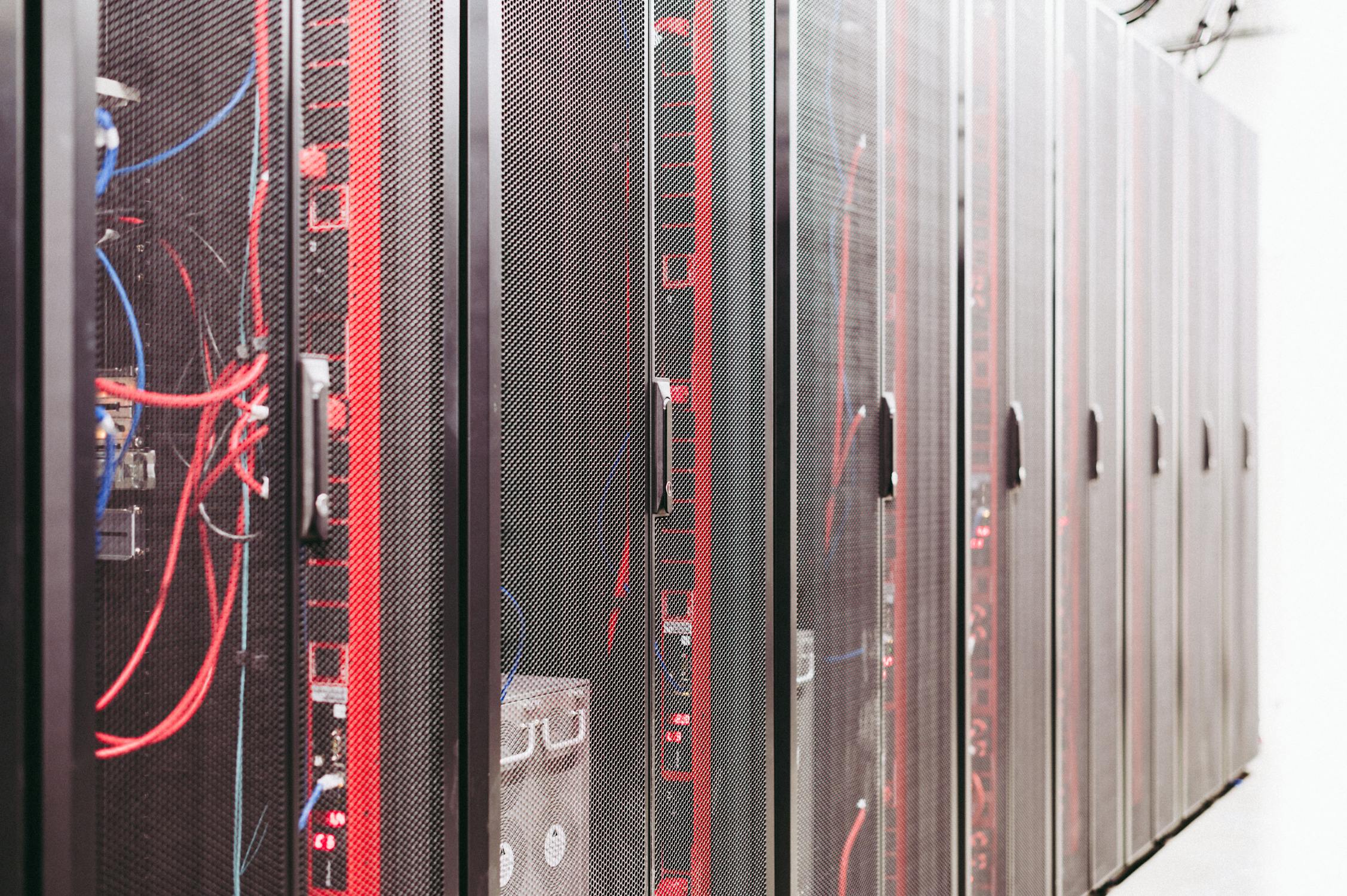
Data centres. The primary asset in the AI infrastructure buildout is the data centre specifically, hyperscale facilities designed to house and power the GPU clusters required for AI training and inference. A state-of-the-art AI data centre is not simply a warehouse full of computers. It is a complex engineering project involving purpose-built structural systems, specialised cooling systems (AI GPUs generate extraordinary heat densities that conventional air cooling cannot handle), dedicated power delivery infrastructure, and redundant networking connectivity. The cost per megawatt of capacity in an AI-optimised data centre is significantly higher than in a conventional data centre in the range of $15-20 million per MW for the most advanced facilities, compared to $7-10 million for standard hyperscale construction.
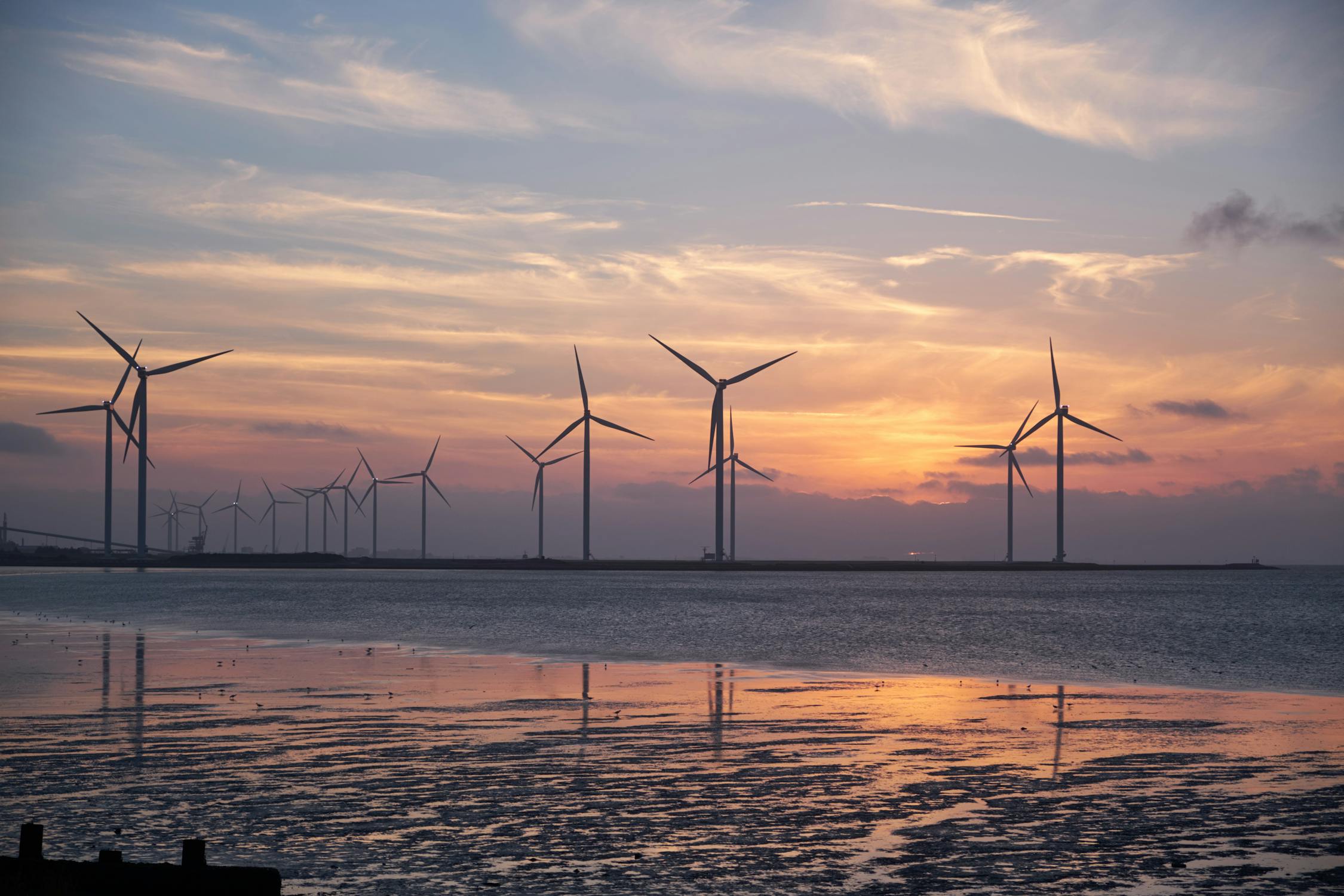
Power generation and distribution. Perhaps the most acute bottleneck in the AI infrastructure buildout is not land, building materials, or even GPUs it is power. Data centres are voracious electricity consumers, and the pace of the buildout is exceeding the capacity of grid infrastructure to deliver the required supply in many jurisdictions. The consequence is that hyperscalers and their data centre development partners are increasingly pursuing dedicated power solutions: on-site natural gas generation, direct contracts with nuclear power plants (the Microsoft-Three Mile Island restart being the most high-profile example), and investments in advanced nuclear technologies (small modular reactors). The power dimension of AI infrastructure is creating a new category of project finance that bridges energy and technology in ways that existing financing structures were not designed to handle.
Networking infrastructure. Moving data at the speeds required for AI training and inference demands networking infrastructure of extraordinary density and capacity optical fibre within data centres, high-bandwidth interconnects between facilities, and the undersea cables that link geographically distributed facilities. The networking infrastructure buildout is happening in parallel with data centre construction and involves significant capital commitment from both hyperscalers and dedicated telecommunications infrastructure companies.
Cooling systems. The thermal management challenge created by AI GPU clusters is generating a significant market for specialised cooling solutions liquid cooling systems, immersion cooling, and the associated mechanical and plumbing infrastructure. Companies in this space have seen explosive demand, and supply chain constraints have created lead times of 12-24 months for certain cooling components.
The Financing Architecture: How the Buildout Is Being Funded
The $600 billion annual capex figure is large but somewhat misleading as a guide to capital market activity. The largest hyperscalers Alphabet, Amazon, Meta, and Microsoft are all generating very substantial free cash flows and have investment-grade balance sheets that can absorb significant capital expenditure from internally generated funds. They are also accessing public debt markets at scale: tech sector debt issuance reached approximately 16.7% of global non-financial corporate bond issuance in 2025, up from 11.6% in 2024 a dramatic increase that reflects the scale of the financing requirement and the willingness of bond markets to accommodate it.
But the financing architecture extends well beyond the hyperscalers' own balance sheets. A significant and growing proportion of AI infrastructure is being financed through third-party structures that distribute the capital requirement and the risk across a broader investor base.
Real Estate Investment Trusts (REITs) and infrastructure funds. Data centre REITs Equinix, Digital Realty, and the dedicated AI data centre vehicles that have emerged in 2024-2025 provide investors with exposure to the infrastructure buildout through equity-financed platforms. These vehicles sell parcels of their capacity to hyperscalers under long-term lease agreements (typically 10-15 years), financing the construction through a combination of equity capital and secured borrowing against the contracted cash flows.
Private credit and asset-backed structures. Morgan Stanley estimates that private credit could supply more than half of the $1.5 trillion needed for global data centre buildouts through 2028. The growth of data centre securitisation in which the contracted cash flows from hyperscaler tenants are pooled and sold to investors as asset-backed securities has been dramatic: volumes topped $30 billion in 2025, nearly tripling from $10 billion in 2024.
Project finance. For the largest and most complex facilities particularly those integrating dedicated power generation project finance structures (limited recourse debt against the specific project assets and their contracted cash flows) are being used in ways that were previously more associated with energy infrastructure than technology infrastructure.
Hyperscaler direct equity. The hyperscalers themselves are making equity investments in data centre development companies, start-up nuclear energy businesses, and power generation assets directly financing the buildout of the infrastructure they will ultimately use.
The Risk Dimensions: Why $600 Billion in One Thematic Bet Deserves Scrutiny
The extraordinary scale of the AI infrastructure investment creates a set of risk dimensions that honest analysis must address.
Technology obsolescence. AI hardware is evolving at a pace that has no precedent in the history of capital-intensive infrastructure. The GPU architecture that is optimal for current large language model training (NVIDIA's H100 and H200 series) will be succeeded by architectures (Blackwell, Rubin, and beyond) that may require different cooling approaches, different power densities, and different facility configurations. A data centre purpose-built for current AI workloads may face capital expenditure requirements for upgrade or obsolescence risk in a 10-15 year context that the long-term lease structures financing them are not designed to handle.
Revenue assumption risk. The economic case for the AI infrastructure investment rests, ultimately, on the assumption that AI will generate sufficient incremental economic value through productivity improvement, new product development, and revenue generation to justify the capital investment. The history of transformative technologies suggests that the productivity impact is real but typically arrives later and is distributed differently than the initial investment rationale assumes. For capital allocated now, on the assumption of near-term AI revenue, a longer-than-expected productivity adoption timeline creates a period of oversupply.
Competitive dynamics. The AI infrastructure buildout involves multiple hyperscalers building competing facilities simultaneously. This is rational at the individual firm level each hyperscaler needs to secure AI capability but collectively it may produce temporary overcapacity as the market digests the supply. Periods of data centre oversupply in the conventional data centre market (most recently in 2015-2017) produced significant valuation compression for data centre assets, even when the long-term demand case remained intact.
Geographic and regulatory concentration. A significant portion of the AI infrastructure buildout is concentrated in a small number of US markets northern Virginia, Phoenix, Dallas, and a handful of others that have the combination of power, land, and connectivity required. Concentration in these markets creates exposure to local power grid constraints, regulatory intervention, and the political economy of communities dealing with the water consumption, noise, and visual impact of large-scale data centre development.
The Secondary and Tertiary Investment Opportunity
For institutional investors who find the primary infrastructure investment (direct equity in data centres or financing structures) appropriately priced relative to their risk framework, the secondary and tertiary themes may offer better risk-adjusted return profiles.
Power generation and grid infrastructure. The power constraint is more acute than the data centre construction constraint. Companies that own or can develop generating capacity near data centre clusters traditional gas turbines, nuclear power, utility-scale renewables have pricing power that is not captured in data centre valuations. The regulatory and permitting complexity of power development is a genuine barrier to entry that protects the economics of existing and planned capacity.
Thermal management and cooling. The specialised cooling industry liquid cooling systems, immersion cooling, precision climate control is growing at extraordinary rates and is supply-constrained. Companies with validated technologies and production capacity have a multi-year demand visibility that rivals data centre operators.
Networking and connectivity. The fibre infrastructure, switches, and routers required to connect AI infrastructure represent a capital investment that is less glamorous than data centres but more technically differentiated and more operationally critical.
Semiconductors and materials. The semiconductor supply chain underpinning AI hardware GPU manufacturers (NVIDIA, AMD), memory producers (SK Hynix, Micron, Samsung), and specialised materials and equipment manufacturers has a direct and demonstrable connection to the infrastructure buildout that is easier to underwrite than the data centre real estate itself.
Conclusion: Essential, Extraordinary, and Requiring Analytical Discipline
The AI infrastructure buildout is the most significant single capital allocation in the global economy in 2026. Its importance to the future development of AI capability and, through that, to economic productivity and competitive positioning is not in question. The analytical discipline required of capital allocators is to hold this strategic importance alongside a rigorous assessment of valuation, structure, and timeline risk.
The history of transformative infrastructure cycles railroads, electricity grids, telecoms buildouts is instructive. In each case, the long-term productivity and economic value was real and eventually enormous. In each case, the initial investors in the infrastructure frequently did not capture the economic value they created.
The current cycle may be different. The dominant players are better-capitalised, more strategically coherent, and more directly aligned with the AI application layer than the infrastructure investors of previous eras. But the analytical humility to acknowledge that transformative capital cycles have historically been better for the economy than for the initial infrastructure investors is essential to a rigorous investment framework.
This article is produced by Brenton Financial Research for informational and educational purposes only. It does not constitute financial, investment, legal, or tax advice. The views expressed reflect the research team's analysis of publicly available information and should not be relied upon as the basis for any investment decision. Brenton Financial Pty Ltd (ABN 21 696 298 227). Past performance is not indicative of future results.