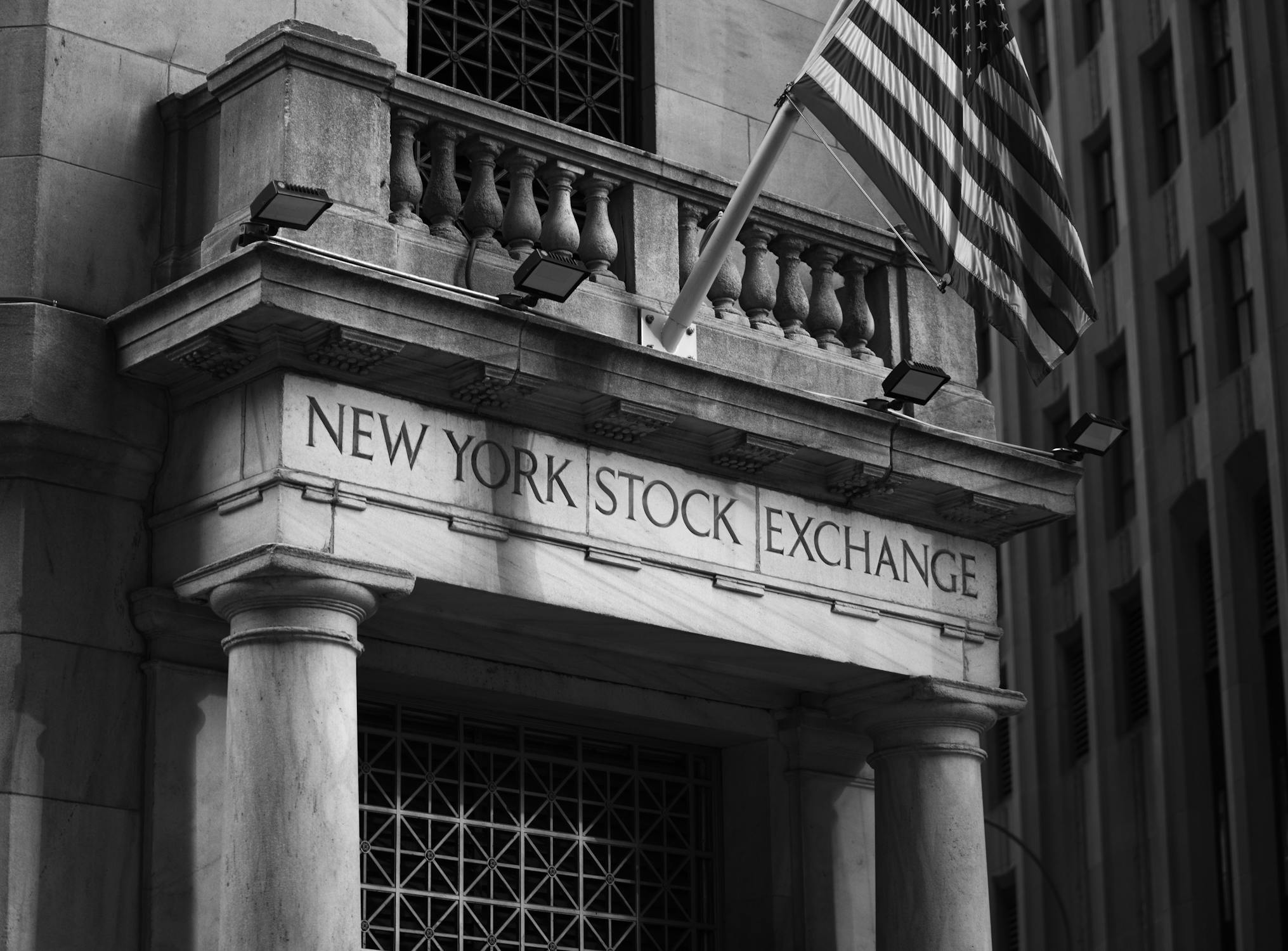
The IPO market in 2026 presents one of those genuinely contested analytical questions that the sell-side tends to resolve too quickly in a preferred direction. There is a deal pipeline of meaningful depth. There is investor demand for high-quality new issues. The enabling conditions declining short-term rates, improving PE exit economics, regulatory clarity, and public market confidence are more supportive than at any point since the 2021 boom. Morgan Stanley's equity underwriting revenues increased 80% year-over-year in Q3 2025, driven primarily by IPO activity a data point that reflects a real recovery.
But 2021 is the correct reference point to hold in mind, and not as an aspirational comparison. The 2021 IPO boom produced a cohort of listings that, taken in aggregate, destroyed substantial shareholder value. The SPAC wave was spectacular as a financial engineering exercise and poor as a mechanism for delivering durable public market value. The direct listing era revealed its limitations. And the technology companies that came public at 30-50x revenues found that public market patience for unproven revenue at premium multiples was, in retrospect, more fragile than the peak-cycle pricing suggested.
The 2026 IPO market is structurally different from 2021 more selective, more quality-conscious, and more focused on demonstrable revenue quality rather than total addressable market storytelling. Whether that selectivity is a permanent feature of a matured market or a conservative overhang that will give way to cycle dynamics as conditions improve is the central question for ECM practitioners and issuers planning their liquidity events.
The Composition of the 2026 Pipeline
A useful starting point is examining what is actually in the pipeline not the abstract volume statistics, but the composition by sector, stage, and financial profile.
AI-adjacent technology companies. The largest and most discussed portion of the pipeline involves companies that have built their narrative (and in many cases their genuine business model) around artificial intelligence. This sub-category runs from infrastructure-level businesses (data centre operators, networking companies, power management firms) through platform-level AI tools (enterprise software, developer tools, vertical AI applications) to application-level businesses using AI to reimagine existing industries.
The investment case for many of these is genuine. Revenue is real, growth rates are high, and the market opportunity is large. The challenge is valuation: late-stage private market rounds in 2024 and 2025 were conducted at multiples that, in some cases, require public market investors to underwrite very long-duration growth assumptions to achieve adequate risk-adjusted returns. The transition from a private market (where the investor base is constrained and the market-clearing price is negotiated bilaterally) to a public market (where price discovery is continuous and exit is available to any shareholder at any time) has historically produced valuation compression for businesses whose private market pricing was aggressive.
PE-backed carve-outs and sponsored businesses. Private equity firms with aging portfolio companies the median holding period for buyout companies now exceeds six years, the longest in two decades are under significant LP pressure to generate distributions. IPO is one of the primary exit mechanisms, alongside M&A and secondary transactions. The PE-backed IPO pipeline typically involves businesses with demonstrable earnings, operating history, and financial discipline that the sponsor has imposed through its ownership period. These are generally more investor-friendly as public market listings than pure-growth technology companies, and they tend to price and trade better in the first year of public market life.
Healthcare and biotech. The healthcare IPO market has historically been driven by data events clinical trial readouts, FDA approvals, and the pipeline diversification needs of large cap pharma acquirers. In 2026, the GLP-1 obesity drug boom has created significant attention to the metabolic disease space, and the patent cliff dynamic is motivating oncology and immunology biotech listings as acquirers signal interest in pipeline-stage companies. Biotech IPOs require sophisticated investor assessment of clinical risk, regulatory pathway, and competitive positioning that differentiates the quality of institutional demand.
Financial services and fintech. A combination of deregulation signals and the maturation of several fintech businesses from startup to scaled-revenue status has created a pipeline of financial services IPOs. Digital banking platforms, payments businesses, and insurance technology companies with several years of operating history are approaching public market readiness. The fintech sector carries the additional context of the 2021 vintage several high-profile digital finance listings from that period have performed poorly and investor due diligence on unit economics and the path to profitability is more rigorous than it was.
The Valuation Bridge: From Private to Public
The single most consequential analytical question in assessing the 2026 IPO pipeline is the valuation bridge between where these companies last raised private capital and where public market investors will clear them.
The magnitude of private-to-public valuation compression varies significantly by business quality and market timing. For the best businesses companies with high revenue quality, strong unit economics, clear competitive moats, and governance structures that institutional investors respect the discount from last private round to IPO price can be modest (10-20%) or, in exceptional cases, non-existent if the business has continued to grow into its valuation since the last round.
For businesses where the narrative has outrun the fundamentals high revenue growth but deteriorating unit economics, large total addressable market but unclear path to capture, or founder governance structures that dilute institutional voice the discount from the last private valuation can be severe. Businesses that raised at 20x revenue in 2023-2024 may clear at 10-12x in the public market, requiring existing investors to absorb a significant mark-down from their private market book values.
The interaction between IPO pricing and PE performance reporting is a more significant force in the current market than ECM analysis typically acknowledges. PE firms, whose LPs receive quarterly NAV reports based on private market valuations, have strong incentives to manage the IPO pricing process in a way that avoids large public mark-downs. This creates periodic friction between sponsor pricing expectations and the market-clearing price that institutional investors are willing to accept. The tension is resolved in the roadbook process and the outcome tells you a great deal about the relative bargaining power of sponsor and investor in any given market condition.
The Enabling Conditions in Context
The conditions enabling the IPO market recovery are real, but they operate on a specific set of assumptions that deserve examination.
Rate environment. A declining short-rate environment is supportive for equity valuations in general and for long-duration growth assets in particular. The present value of future cash flows is higher when discount rates are lower, which benefits high-growth companies whose cash flows are weighted toward the out-years. The ECM calendar in 2026 is partly a function of the rate path, and any significant reversal (an inflation shock, a Fed communication error, a Japan-driven move in the long end) would compress the window for aggressive growth-company listings.
Public market sentiment. Public market investors have become more discriminating after the 2021-2022 experience. The gap between companies that price at IPO and continue to trade well and those that break issue price immediately has widened. IPO investors in 2026 are conducting more rigorous financial analysis specifically interrogating customer acquisition costs, net revenue retention, path to free cash flow break-even, and the credibility of addressable market assumptions than their 2021 equivalents.
Lock-up dynamics and insider selling. A well-functioning IPO requires a period in which all existing shareholders founders, PE sponsors, and pre-IPO investors are restricted from selling. The standard lock-up period is 180 days. When lock-ups expire and insiders sell, the supply of shares increases; if demand does not absorb this supply, prices decline. The post-lock-up trading pattern is the most objective test of whether the IPO was priced at a level that genuinely reflected fair value or whether it was managed to a level that rewarded insiders at the expense of public market investors.
Asia and Emerging Market IPO Activity
The IPO calendar is global, and the non-US dimension is important for institutions with international mandates.
India with its growing domestic equity market depth, expanding institutional investor base, and pipeline of family-owned businesses seeking capital market access is one of the most active IPO markets globally. The National Stock Exchange of India (NSE) and BSE have hosted a series of high-profile listings in technology, financial services, and consumer sectors.
The Indian IPO market has a specific feature worth noting: the domestic retail investor participation is substantial, and the political premium placed on broad-based ownership of high-profile new listings creates dynamics that differ from institutional-driven Western ECM. The subscription multiples for flagship Indian IPOs frequently reach extraordinary levels creating both excitement and the potential for secondary market disappointment when the initial euphoria meets fundamental valuation reality.
Southeast Asian equity markets Singapore, Indonesia, Malaysia are developing their own IPO ecosystems, with regional champions in financial technology, e-commerce, and consumer services seeking listings that provide both capital access and the governance credibility of public company status. The depth of these markets is limited relative to their potential, and the pipeline of suitable listing candidates is broader than the available institutional demand.
What Makes an IPO Successful in the Current Environment
For issuers and their advisors, the lessons of the 2021-2024 period are instructive and worth stating plainly.
Revenue quality matters more than revenue growth. Public market investors in 2026 are focused on the predictability and defensibility of revenue annual recurring revenue with high net retention, long contract terms, and low customer acquisition costs as much as on headline growth rates. A business growing at 20% with 95% net revenue retention and clear free cash flow visibility is more valuable, on a risk-adjusted basis, than one growing at 50% with high churn and customer acquisition costs that are consuming the revenue growth.
Path to profitability must be credible. The "growth at all costs" era is over. Public market investors want to understand the specific mechanisms by which a company will transition from cash consumption to cash generation, the time horizon for that transition, and the milestones that will confirm the trajectory. Vague assertions about operating leverage and scale efficiency are no longer adequate.
Governance and founder relationships with institutional investors. The era of founder-controlled companies with supervoting share structures that effectively disenfranchise public market investors is encountering increasing resistance. Institutional investors and the governance functions at major asset managers are more willing to exercise their voice on governance structures, including by declining to participate in IPOs that they assess as structurally unfair to public shareholders.
Lockup credibility and insider alignment. The credibility of insider commitment demonstrated through extended lockups, significant ongoing ownership, and transparency about plans for secondary selling is a meaningful signal to public investors about how sponsors and founders assess the fundamental value of the business relative to its IPO price.
Conclusion: A Selective Market, Not a Structural Recovery
The 2026 IPO market is healthy but not exuberant, selective but not closed. The distinction matters for the investment case. A healthy, selective IPO market produces well-structured transactions at prices that public market investors can earn acceptable returns from and this is good for the long-term health of equity capital markets. An exuberant market produces aggressive pricing, structural deterioration, and eventually the disappointment that characterised the post-2021 period.
The current environment more closely resembles healthy selectivity than exuberance, but the risk of deterioration is present. As conditions remain supportive, the competitive pressure on institutional investors to participate in hot transactions creates the mechanism through which selectivity gives way to momentum.
For sophisticated investors, the discipline of the current environment the willingness to pass on transactions whose fundamental quality does not support the pricing is worth preserving even as optimism builds.
This article is produced by Brenton Financial Research for informational and educational purposes only. It does not constitute financial, investment, legal, or tax advice. The views expressed reflect the research team's analysis of publicly available information and should not be relied upon as the basis for any investment decision. Brenton Financial Pty Ltd (ABN 21 696 298 227). Past performance is not indicative of future results.